EWORKPULSE CASE STUDY
Improving workforce visibility for distributed delivery and operations teams.
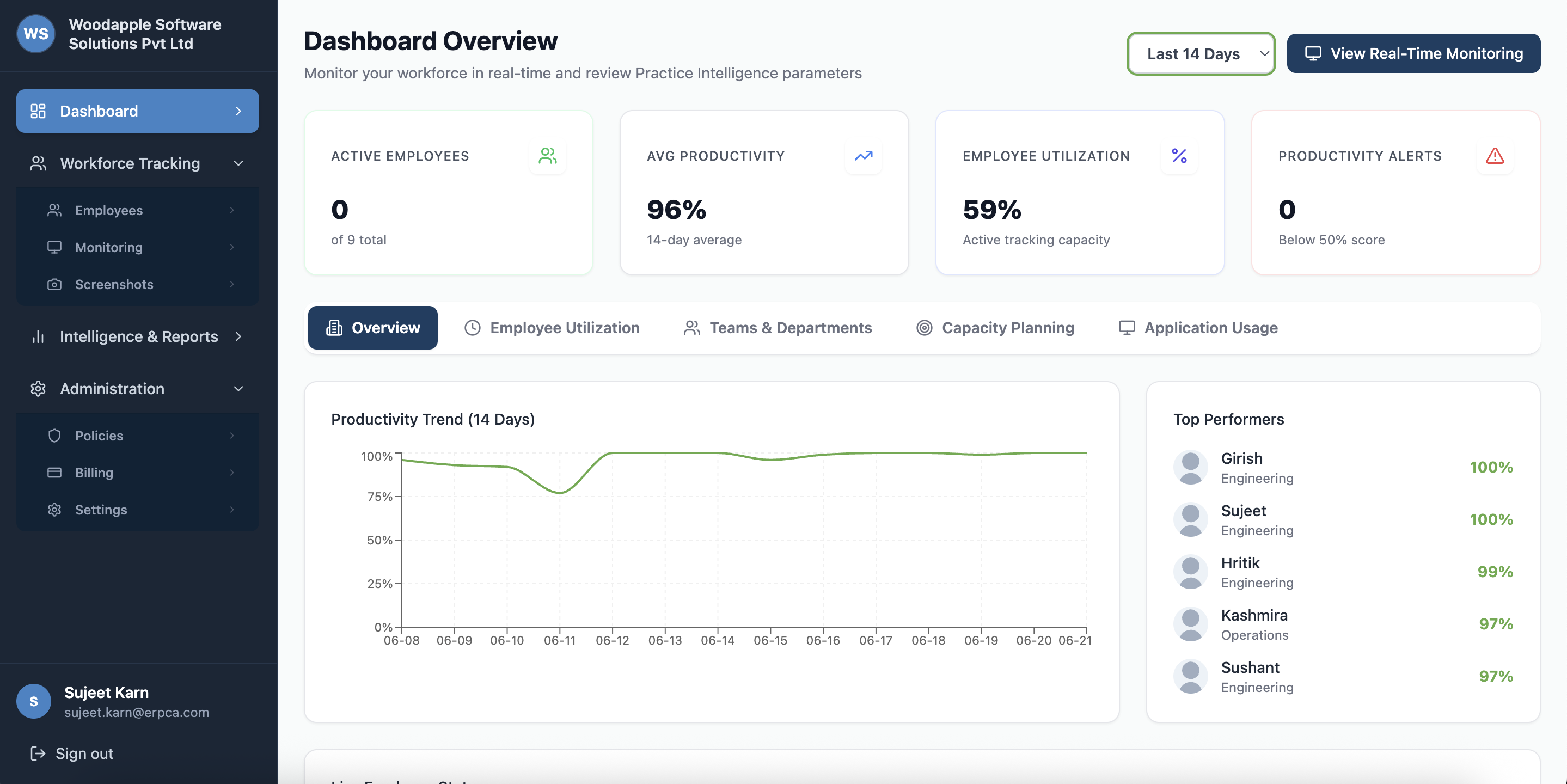
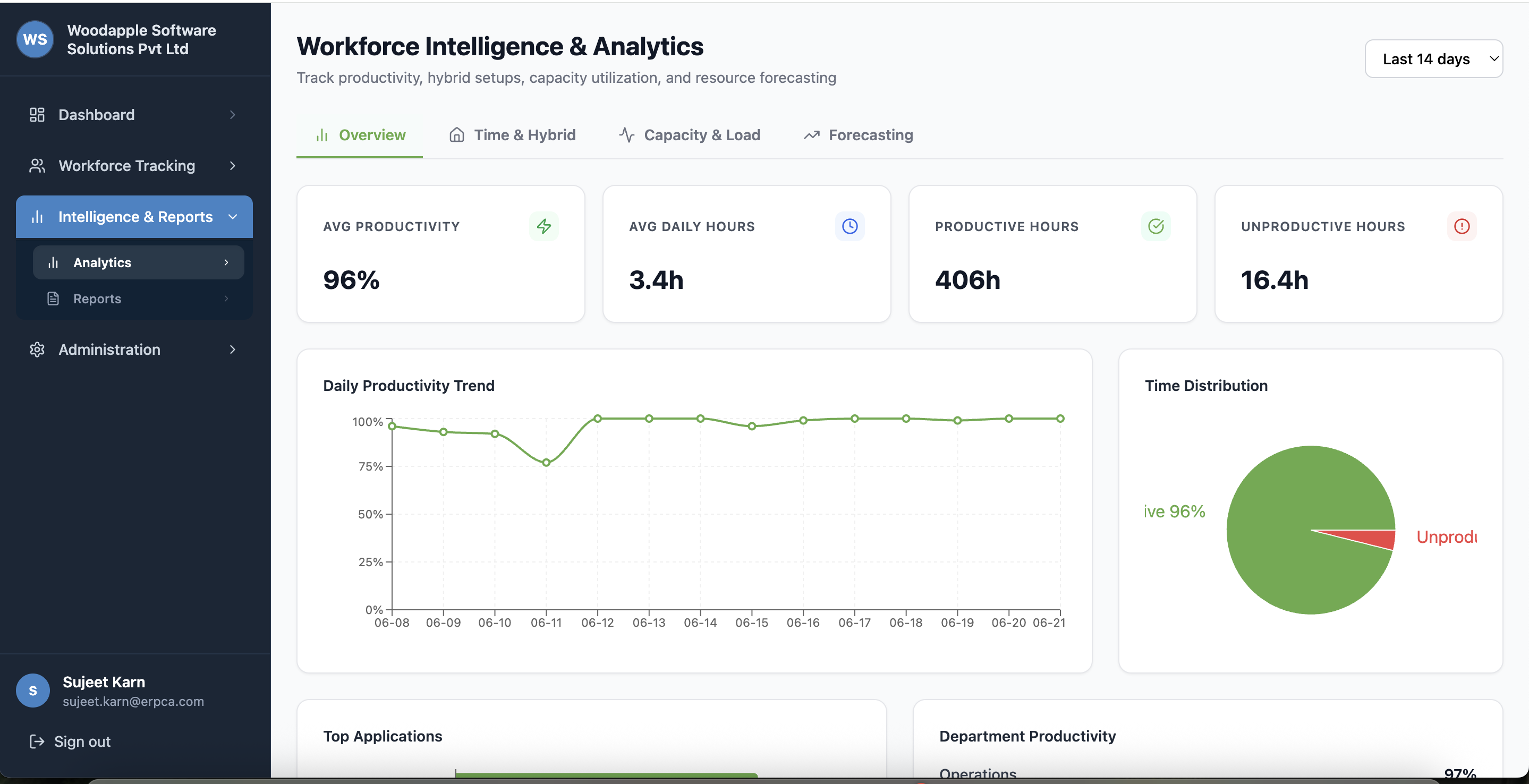
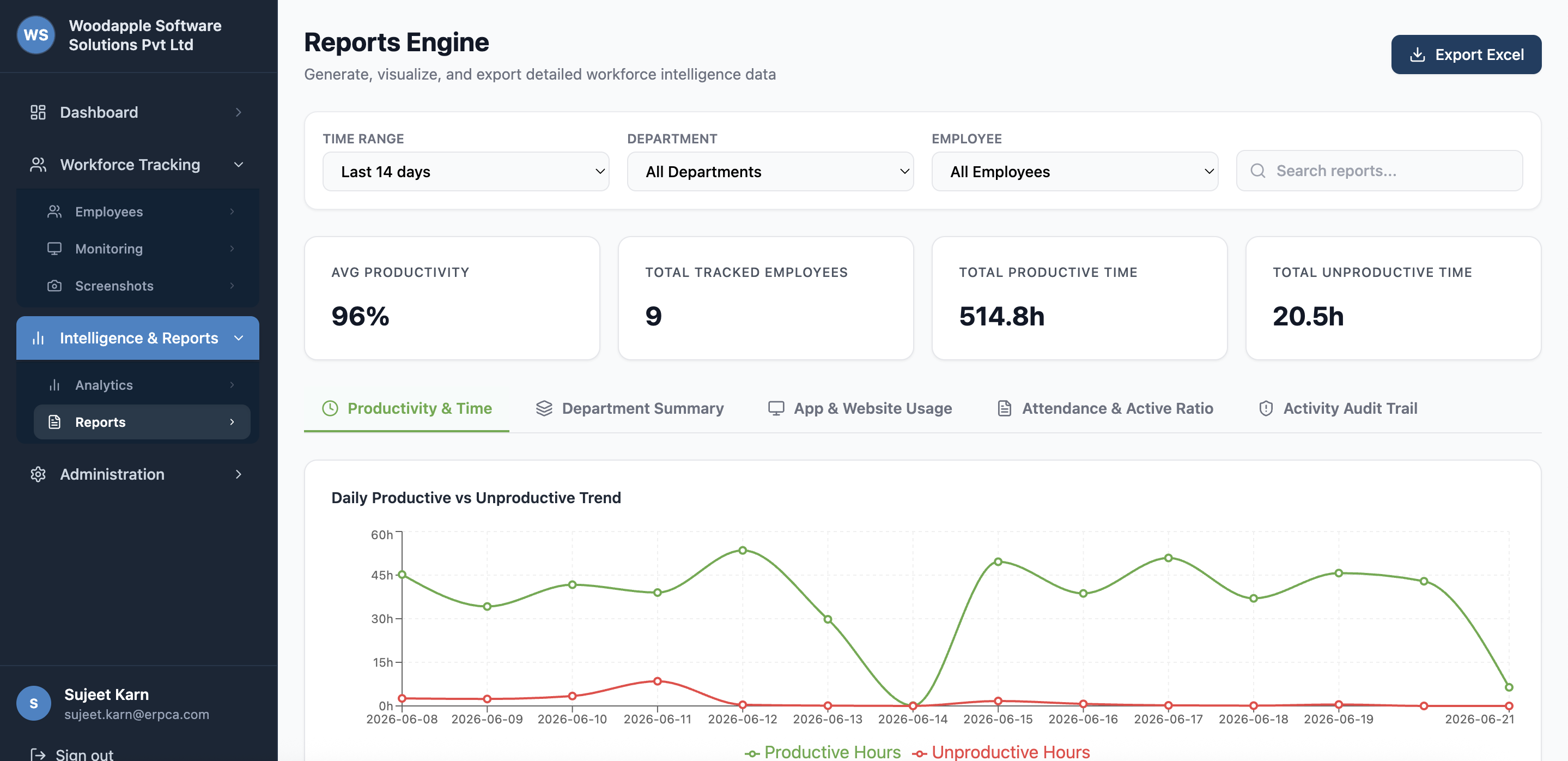
This anonymized eWorkPulse deployment shows how a hybrid team gained better productivity visibility, utilization insight, and capacity planning confidence through a unified workforce intelligence layer.

BUSINESS CONTEXT
The challenge
The organization was managing distributed teams across functions and managers without a dependable view of how time was being spent, where utilization issues were emerging, or which teams were at risk of overload or under-allocation.
Leaders had data, but not dependable operational intelligence. Planning reviews depended on assumptions, fragmented reports, and inconsistent interpretation across departments.
- Limited visibility into productive hours and work patterns
- Manager decisions based on inconsistent reporting inputs
- Weak signals for workload imbalance and capacity risk
- Difficult forecasting for staffing and delivery planning
SOLUTION DESIGN
What eWorkPulse introduced
The product created a decision-ready workforce intelligence layer that leaders could actually use in operating reviews.
Unified Productivity View
Managers could see trends in productive hours, work distribution, and emerging patterns by team and department.
Utilization Intelligence
The organization gained a clearer signal on allocation, capacity pressure, and hidden bench or overload risk.
Manager-Led Interventions
Supervisors had enough detail to act earlier when team performance or workload balance began to drift.
Planning and Forecasting Support
Leadership reviews shifted from debate about data validity to action based on common operational evidence.
IMPLEMENTATION APPROACH
How the rollout created adoption
Metric alignment
Defined what productivity, utilization, and workload balance should mean consistently across teams.
Dashboard rollout
Delivered role-relevant views for leadership, managers, and operations stakeholders instead of one generic reporting layer.
Review rhythm design
Embedded eWorkPulse into recurring planning, staffing, and performance conversations so insight translated into action.
Operational tuning
Used live feedback from leaders and managers to refine thresholds, focus areas, and intervention patterns.
OUTCOMES
What improved after adoption
Stronger workforce visibility
Leaders gained a more dependable view of capacity, productivity trends, and team-level variance across the organization.
Better manager decisions
Operational leads could identify imbalances earlier and intervene before underutilization or overload became larger issues.
Planning confidence
Capacity reviews and staffing decisions became faster and more grounded in consistent operational data.
Improved delivery predictability
Teams had better inputs for allocation and workload management, supporting more realistic execution planning.
FAQ
Why this eWorkPulse case study matters
Who is this type of solution relevant for?
It is highly relevant for professional services, delivery organizations, operations teams, and hybrid work environments that need better workforce clarity.
What problem did eWorkPulse solve first?
It first solved visibility: giving leaders and managers a common, trusted view of productivity and utilization patterns.
Was this only a dashboard project?
No. The value came from operational alignment, review rhythm, and manager actionability, not just from visual reports.
Why is anonymized storytelling still useful for SEO?
Because decision-makers search for use cases, outcomes, and implementation patterns. Clear problem-solution narratives remain highly relevant even without naming the client.
EXPLORE THE PRODUCT
Need better visibility into utilization, capacity, and workforce performance?
eWorkPulse helps leaders replace assumptions with consistent operational intelligence and more confident planning.