LITIGATIONHUB CASE STUDY
Centralizing tax and legal operations for a high-volume, multi-entity enterprise.
This anonymized deployment shows how LitigationHub replaced spreadsheet-led notice and appeals tracking with a structured system for workflow control, document access, exposure visibility, and governance.

BUSINESS CONTEXT
The challenge
The enterprise tax and legal operations function was handling notices, scrutiny cases, appeals, documents, and compliance calendars across multiple entities. Critical information lived across emails, folders, spreadsheets, and individual team memory.
As case volume increased, leaders struggled to answer simple operational questions quickly: What is open, what is overdue, what is the exposure, and which matters require escalation?
- No single source of truth for notices and appeals
- Slow retrieval of historical records and supporting documents
- Inconsistent tracking of due dates and ownership
- Leadership reporting assembled manually across teams
SOLUTION DESIGN
What LitigationHub changed
The implementation focused on turning fragmented case handling into an accountable digital operating system.
Centralized Matter Registry
All notices, scrutiny items, appeals, and supporting records were brought into one searchable workflow layer.
Document and Due-Date Control
Relevant files, deadlines, and owner assignments were attached directly to each matter for stronger execution discipline.
Exposure Reporting
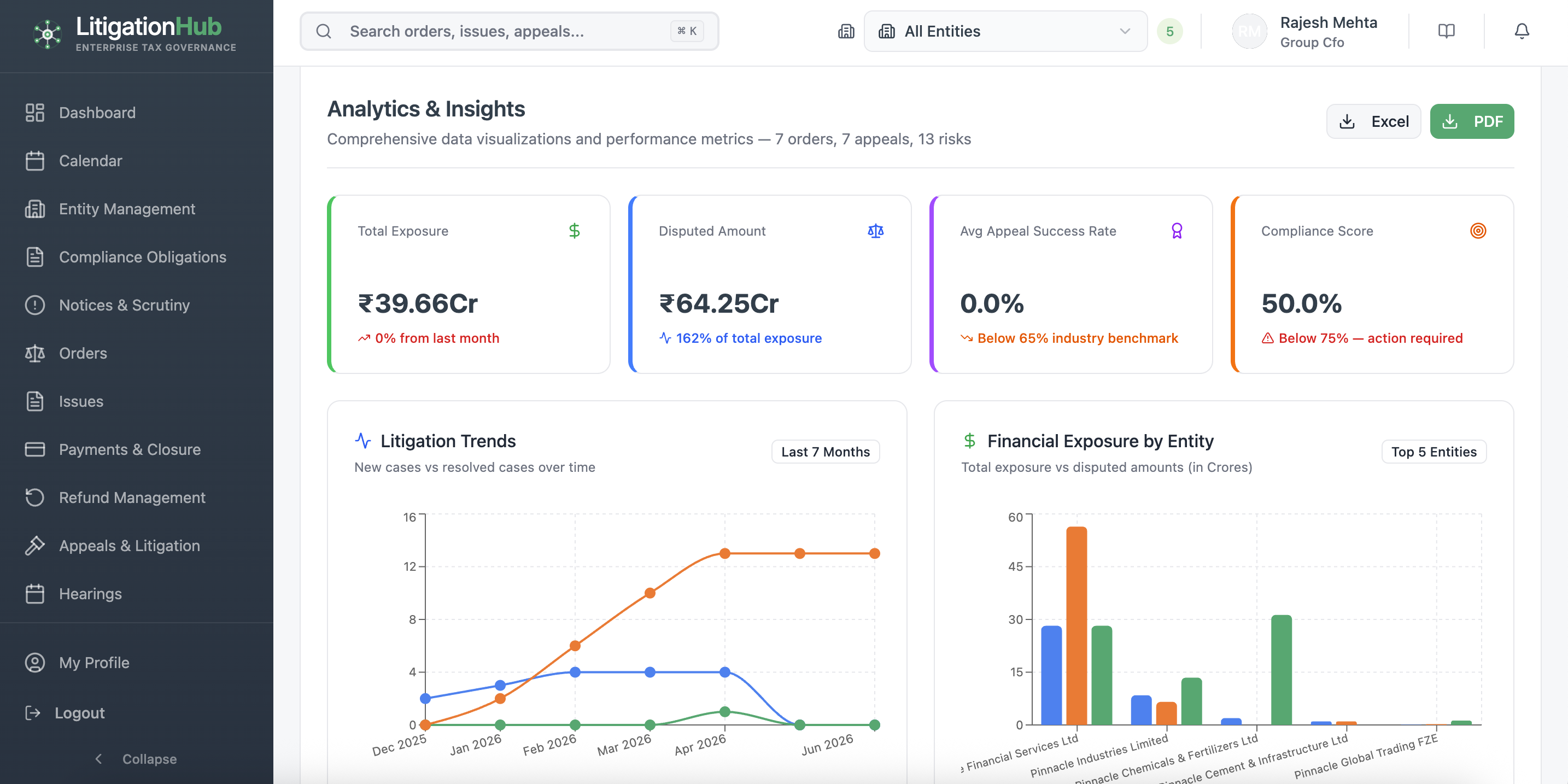
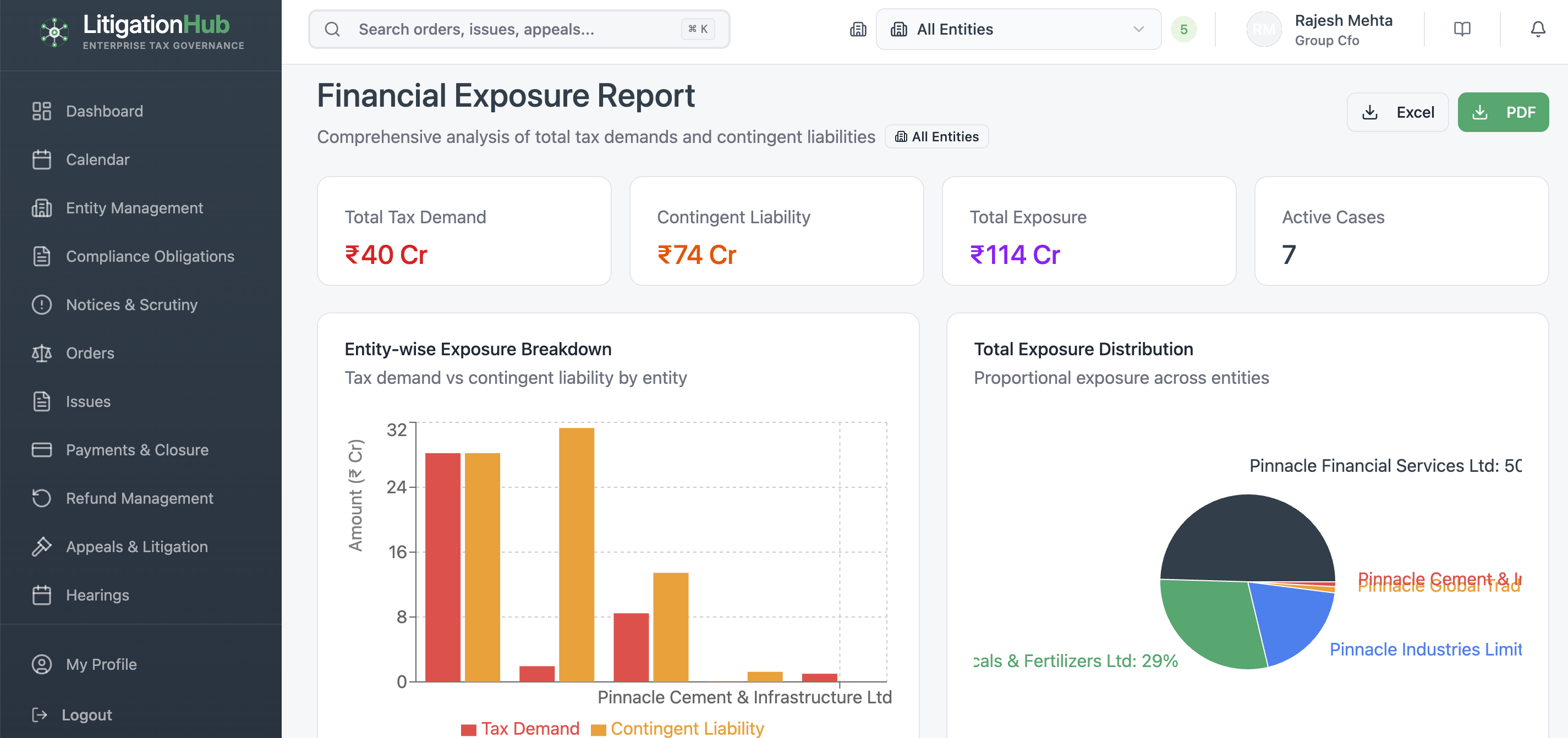
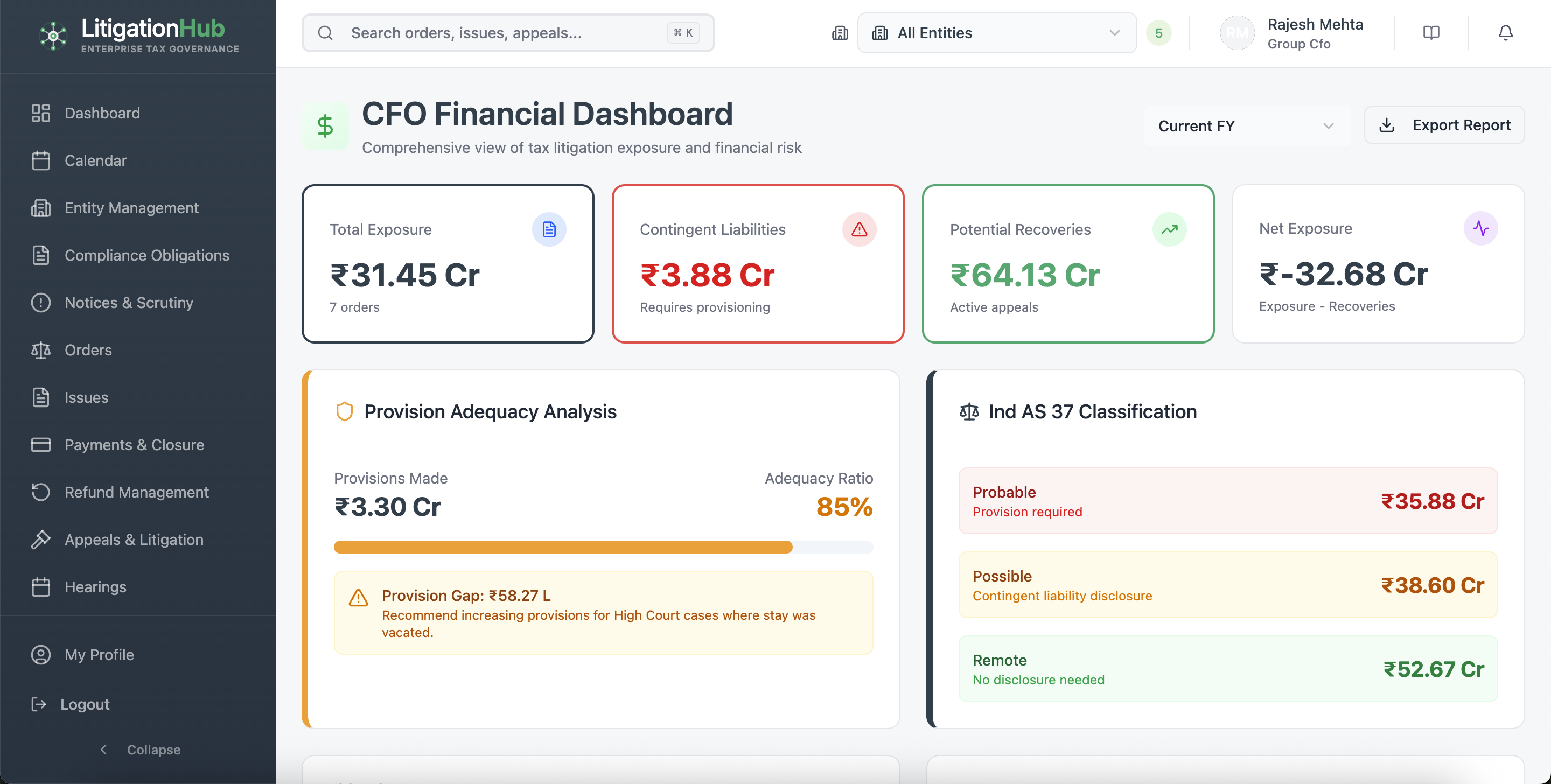
Leaders gained structured visibility into financial exposure by entity, case stage, and issue type.
Governance Dashboards
Review meetings shifted from data collection exercises to decision-making conversations backed by current information.
IMPLEMENTATION APPROACH
How the rollout was structured
Workflow mapping
Mapped notice handling, case progression, document dependencies, and escalation paths across teams.
Data consolidation
Standardized matter records and reporting fields to remove ambiguity from historical tracking methods.
Governance enablement
Configured dashboards, reminders, ownership rules, and operating reviews around the new platform.
Adoption support
Enabled day-to-day users and leadership reviewers so platform usage became part of regular operating rhythm.
OUTCOMES
What improved after adoption
Faster retrieval and response readiness
Teams could access matter history, records, and supporting documents significantly faster during reviews and escalations.
Stronger compliance discipline
Deadline visibility and ownership tracking helped eliminate missed compliance actions after implementation.
Reduced manual coordination
Staff spent less time chasing updates across email chains and spreadsheets, freeing effort for substantive work.
Leadership confidence
Executives gained more dependable exposure and status visibility without waiting for manually assembled reports.
FAQ
Why this LitigationHub case study matters
Who is this type of deployment relevant for?
It is relevant for enterprise tax, legal, and compliance teams managing high volumes of notices, appeals, obligations, and document-heavy workflows.
What business problem did the platform solve first?
The first priority was operational control: creating a single source of truth for matters, due dates, documents, and ownership.
Was the value only reporting-related?
No. Reporting improved because the underlying workflow became structured and reliable, not because dashboards were added in isolation.
What made the outcomes sustainable?
Sustainability came from workflow standardization, clearer governance, and integrating the platform into recurring review and execution routines.
EXPLORE THE PRODUCT
Need better control over tax governance and legal operations?
LitigationHub is built for teams that need workflow discipline, exposure visibility, and audit-ready execution.